Got a tiny patch of green that feels more like a glorified doormat than a garden? You’re not alone. Millions of homeowners stare out at their compact outdoor spaces, wondering how on earth to turn them into something worth bragging about. The good news? Small doesn’t mean limited. In fact, some of the most stunning gardens in the world are tucked into spaces smaller than a parking spot.
Why Small Gardens Have a Secret Advantage
Here’s something most people miss: small gardens are easier to design well. With limited space, every plant, path, and pot matters. That forces intentional choices, which almost always leads to a more cohesive, polished look than sprawling lawns that often feel scattered.
Small gardens are also cheaper to maintain, faster to renovate, and far more forgiving when you want to experiment with bold colors or unusual layouts. Think of your tiny outdoor space as a curated gallery rather than a canvas you have to fill.
Go Vertical to Multiply Your Space
When floor space is scarce, look up. Vertical gardening is hands down the most effective trick for squeezing more life into a small footprint. Walls, fences, and even narrow corners become prime real estate for plants.
- Living walls: Modular planter systems let you grow herbs, succulents, or trailing vines on a flat wall.
- Trellises and arbors: Train climbing roses, jasmine, or clematis upward to add height without sacrificing ground area.
- Hanging baskets: Suspend them from pergolas, eaves, or sturdy branches to fill the middle layer of your garden.
- Stacked planters: Tiered pot stands create vertical interest while keeping things mobile.
Choose the Right Vertical Plants
Not every plant thrives stretched upward. Stick with naturally climbing or trailing varieties such as ivy, sweet peas, morning glory, ferns, pothos, and strawberries. For edibles, pole beans and cucumbers love a good trellis.
Use Curves and Diagonals to Trick the Eye
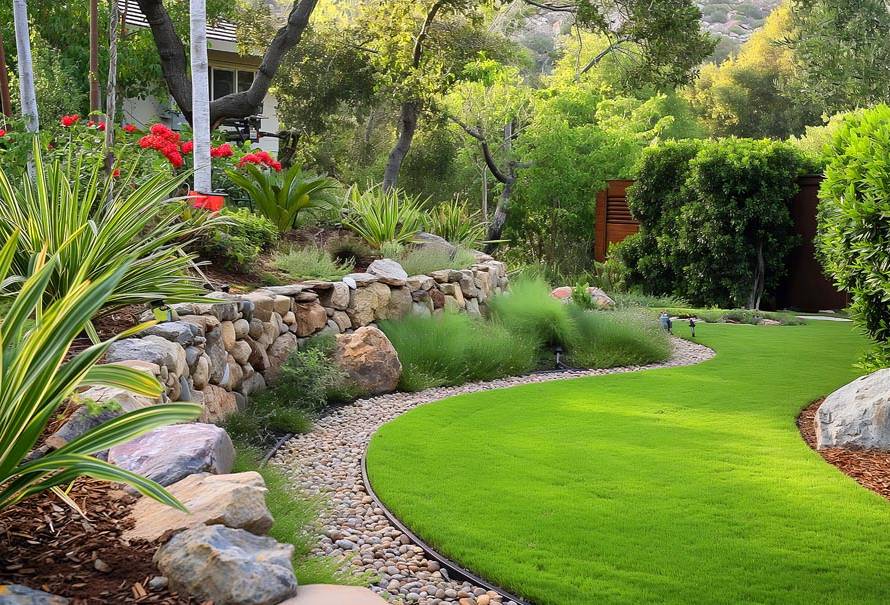
Straight lines in a small garden tend to highlight just how small it really is. Curved pathways, circular patios, and diagonal plant beds, on the other hand, draw the eye on a longer visual journey. Suddenly, a 20-foot yard feels twice as deep.
Try laying a winding gravel path from your back door to a focal point in the far corner. The bend creates mystery, hinting that there’s more garden just out of sight, even when there isn’t.
Create a Focal Point That Demands Attention
Every great small garden has one star. A focal point pulls the eye to a specific spot, which gives the brain a place to rest and makes the entire space feel intentional. Without one, even a beautifully planted garden can feel chaotic.
Ideas for compact focal points include:
- A small water feature like a bubbling urn or wall fountain
- A striking specimen plant such as a Japanese maple or topiary
- A vintage bench or sculptural chair
- An oversized ceramic pot in a bold color
- A mirror mounted on a fence to suggest more space beyond
Layer Plants for Depth and Drama
Flat plantings make small gardens feel flatter. Layering, however, gives your space a lush, full-bodied appearance that mimics nature. Think of it like dressing a window: you need shorter pieces in front, mid-height in the middle, and tall anchors at the back.
The Three-Layer Formula
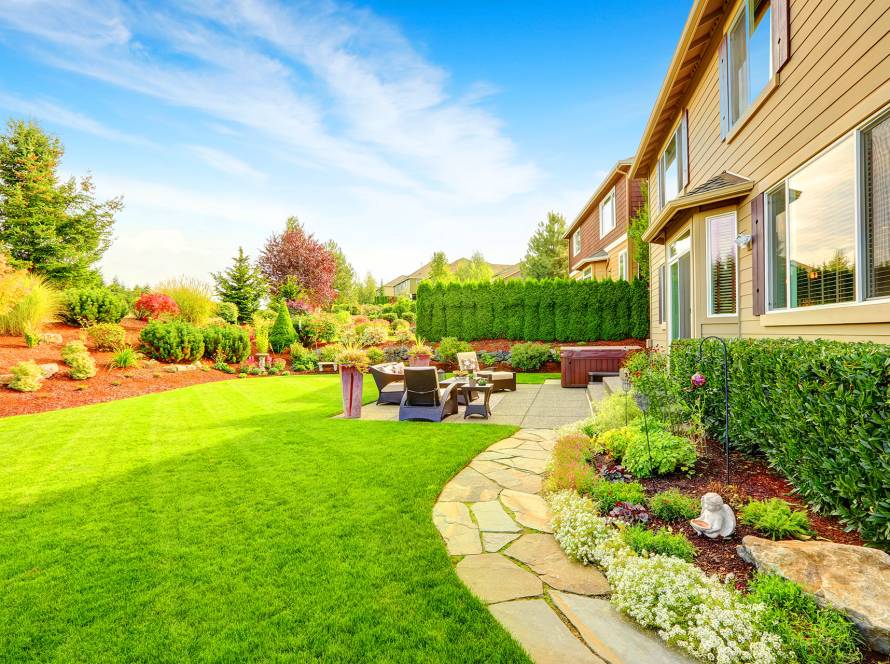
Start with ground covers like creeping thyme, sedum, or moss. Add mid-level perennials such as lavender, salvia, or hostas. Finish with taller anchor plants like ornamental grasses, small trees, or tall shrubs. This simple structure works in any climate and instantly elevates the look of any bed.
Smart Hardscaping for Tiny Yards
Hardscape is the backbone of any garden, and in small spaces it has to work twice as hard. The goal is to choose materials and layouts that feel open rather than cramped.
Pale gravel, cream pavers, and weathered wood reflect light and make spaces feel larger than dark stone or charcoal concrete.
Big format tiles or slabs reduce visual clutter. Lots of tiny pavers can make a small patio feel busy and choppy.
A built-in bench that doubles as planter edging or storage saves space and adds purpose to every element.
Container Gardening Done Right
Containers are the secret weapon of small garden design. They’re movable, swappable, and let you switch up your look with the seasons. But the trick is to go bigger and bolder than you think.
Avoid the common mistake of scattering lots of tiny pots. Instead, choose a few large, statement containers and group them in odd numbers (threes or fives work best). This creates visual weight without crowding the space.
For more detailed inspiration on choosing pots, planting combos, and seasonal swaps, this guide to creative container garden ideas walks through everything from soil prep to color theory.
Lighting Extends Your Garden Hours
A small garden lit beautifully at night feels twice as magical. Strategic lighting also doubles your usable hours, transforming an afternoon patch into an evening retreat.
- String lights: Drape them across a pergola or between trees for instant ambiance.
- Path lights: Low solar stakes guide the eye along walkways and emphasize curves.
- Uplighting: Place small spotlights at the base of trees or sculptures to create dramatic shadows.
- Lanterns: Portable lanterns add warmth and can be moved wherever you’re entertaining.
Don’t Forget Edibles and Herbs
Small gardens can absolutely be productive. Mixing edibles into ornamental beds, known as edimental planting, makes your space both pretty and practical. Rainbow chard, purple kale, and chocolate mint look gorgeous alongside flowers.
Raised beds along a fence line, herb spirals near the kitchen door, or a single dwarf fruit tree in a half-barrel can deliver fresh produce without taking over your design.
Color Palette: Less Is More
In a small garden, a tight color palette creates calm and cohesion. Pick two or three main colors plus a neutral (usually green) and stick with it. Cool tones like blue, purple, and white visually recede, making your garden feel bigger. Hot colors like red and orange jump forward, perfect for adding drama to a focal point.
Common Small Garden Mistakes to Avoid
Even great ideas can flop if you fall into these traps:
- Overcrowding: Plants need room to grow. Always check mature size before planting.
- Ignoring sightlines: Make sure your design looks good from inside the house too, not just from the garden itself.
- Too many materials: Limit hardscape to two or three materials to avoid visual chaos.
- Forgetting maintenance: Small doesn’t mean zero work. Choose plants that match the time you actually have.
- Skipping the budget: Big-impact features like water elements and quality pavers add up fast. Plan ahead.
Bringing It All Together
Designing a small garden is less about cramming things in and more about making smart, deliberate choices. Use vertical space, lean into curves, anchor with a focal point, and keep your palette tight. Add layered plants, thoughtful lighting, and a few bold containers, and suddenly your tiny patch transforms into a destination.
The best part about small garden landscaping ideas is that you can implement most of them over a weekend without breaking the bank. Start with one section, see how it feels, and build from there. Before you know it, that overlooked little space will become your favorite room in the house, just one without a roof.